Large-Scale Rotary Drilling Rig Price Breaking Down the Numbers
Large-Scale Rotary Drilling Rig Price Breaking Down the Numbers

Large-Scale Rotary Drilling Rig Price Breaking Down the Numbers
Today: rotary drilling rigs — the beasts that boil the earth and bore through rock. What do they cost? And why does the price swing so wildly?
What Is a Large-Scale Rotary Drilling Rig?
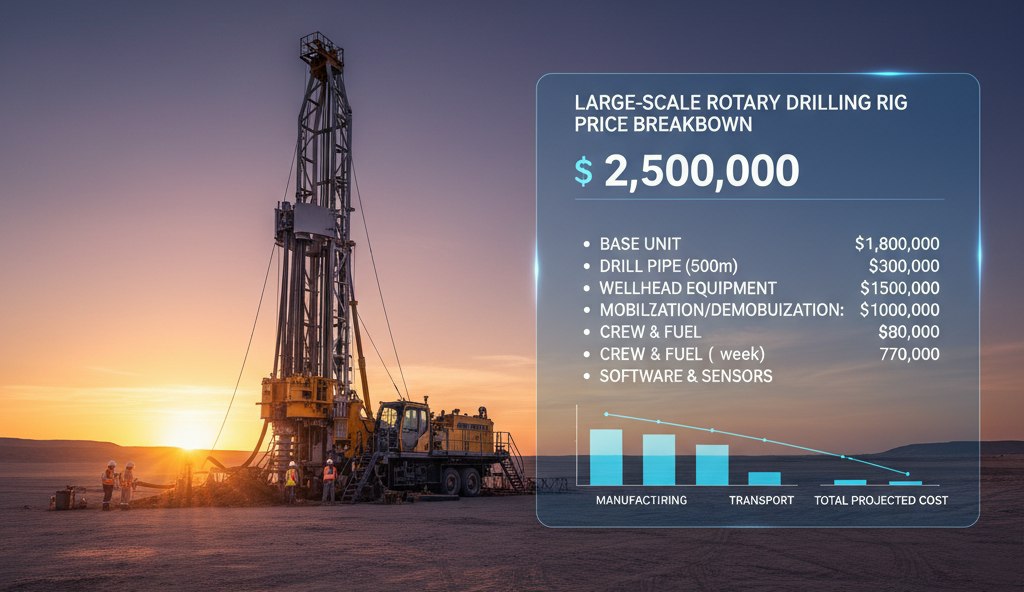
A rotary drilling rig is a machine used to drill into the earth by rotating a drill bit. The “large-scale” models are powerful:
-
designed for deep drilling (several kilometers or hundreds of meters),
-
heavy duty — handling massive loads,
-
used in industries like oil & gas, geothermal wells, mineral exploration, and infrastructure.
Before we talk price, it’s crucial to know what components matter:
| Component | Importance for Price |
|---|---|
| Engine power (HP / kW) | More power = bigger engine = higher cost. |
| Mast height / Derrick size | Taller derricks need more steel, logistics, etc. |
| Drawwork & hoisting equipment | Strength, precision, safety features increase cost. |
| Automation & control systems | Smart drilling tech adds cost. |
| Mobility (on tracks, skid, truck mounted) | Transportation & portability add complexity. |
| Brand / after-sales support / parts availability | Premium brands often charge more. |
Price Ranges: What Buyers Are Actually Paying
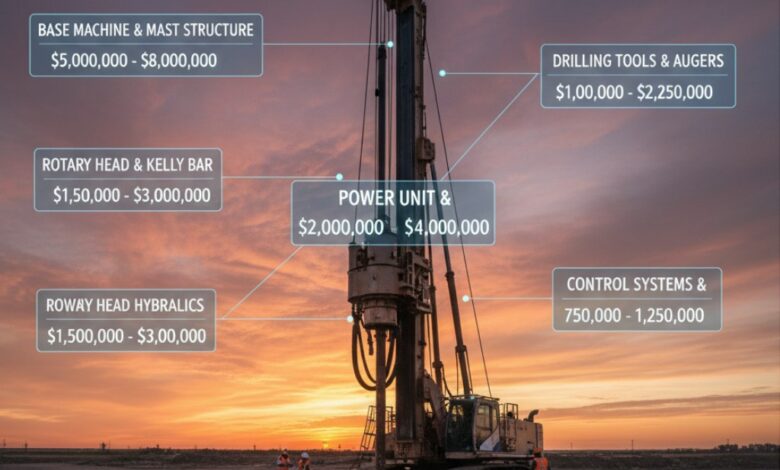
Here’s a rough guide, based on market trends (global buyers, custom vs standard models):
| Type / Feature | Approximate Price Range* |
|---|---|
| Small “large-scale” rigs (e.g. 200-400 meters depth, modest power) | USD 0.5 million – USD 1.5 million |
| Middle tier (400-800 m, strong hoisting, decent automation) | USD 1.5 million – USD 3 million |
| Heavy duty, fully automated, deep drilling rigs (800 m+, high power) | USD 3 million – USD 6+ million |
*Prices vary hugely by country, shipping, import duties, currency, local labour, etc.
Key Factors That Make The Price Jump
What causes a rig to cost USD 3 million instead of USD 1 million? Here are the levers:
-
Depth and diameter capacity
Deeper and thicker holes require stronger components. -
Engine & Powertrain
Fuel efficiency, emissions compliance, turbochargers, auxiliary power systems. -
Automation / Remote Control Features
Sensors, real-time monitoring, remote operation—add sophistication (and cost). -
Mobility & Logistics
Transportable modules, track vs truck vs skid mounted: shipping costs skyrocket with size. -
Material & Build Quality
Steel grade, welding quality, durability—all affect both upfront cost and maintenance. -
After-sales & Support Network
Warranty, spare parts, training, servicing — all baked into the price. -
Customizations & Add-ons
Mud pumps, casing equipment, drilling fluids systems etc.
Case Studies & Market Examples
-
Brand A offers a 500-meter rig, diesel power, basic control panel: ~ USD 1.2 million delivered to site.
-
Brand B with 800-meter capacity, full automation, dual engines, shipped internationally: ~ USD 3.8 million.
-
Used vs New: A 5-year-old rig might drop 30-50% in price, but risk of downtime and maintenance misadventures rises.
If you’re considering procurement, weigh total cost of ownership (purchase + training + maintenance) over just the sticker price.
How to Budget Smartly When Buying a Rig
Here are actionable tips to avoid nasty surprises:
-
Define your application carefully
If you’re drilling geothermal wells vs oil/gas vs infrastructure, your needs differ greatly. -
Get multiple quotes
From local and international suppliers, ask for full breakdowns (engine, hoisting, mast, transport, duties). -
Factor in logistics & import costs
Transport, customs, installation, fuel. -
Check on‐site support & parts availability
A cheap rig with no local support can cost more in downtime. -
Consider financing / leasing
Sometimes paying for performance & uptime is smarter than owning outright. -
Plan for upgrades & future capacity
Buying slightly above current need can save retrofitting later.
Why Prices Vary by Region
-
Labor and steel costs differ sharply between countries.
-
Regulations and emissions standards: rigs compliant with the strictest standards cost more.
-
Currency fluctuations: importers often pay in USD/EUR but sell in local currency.
-
Transport distances to remote sites can double or triple costs for huge rigs.
Buying a large-scale rotary drilling rig isn’t just about how much it costs now, but what it will cost over time:
“The cheapest rig is the one that breaks.”